
Skip to content
FREE SHIPPING ON ALL ORDERS $500 OR MORE

Bitumastic 300m Coal Tar Epoxy Coating Kit

Original price $248.17 - Original price $854.55
Original price
$248.17
$248.17 - $854.55
Current price $248.17

When corrosion protection has to hold — Bitumastic 300M delivers. 

Bitumastic 300M is Carboline's high-build coal tar epoxy polyamide, trusted for decades in the most demanding industrial and marine environments. Self-priming, high-build, and built to protect steel and concrete against immersion, chemical exposure, abrasion, and corrosion. One or two coats. No primer needed.

Proven where it counts:

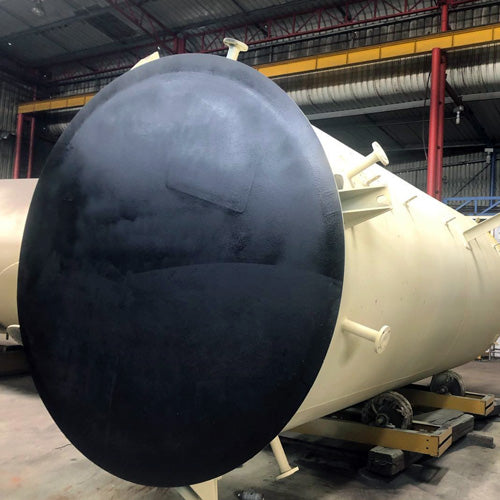
  • Storage Tanks & Piping — Interior and exterior linings for steel tanks and pipelines in chemical and petroleum service
  • Sewage Treatment Plants — Concrete and steel exposed to wastewater, H₂S, and sewer fumes
  • Marine — Hulls & Offshore — Ship hulls, docks, pilings, and offshore platforms in saltwater immersion
  • Chemical & Paper Mills — Maintenance coating for steel and concrete exposed to chemical spills and vapors
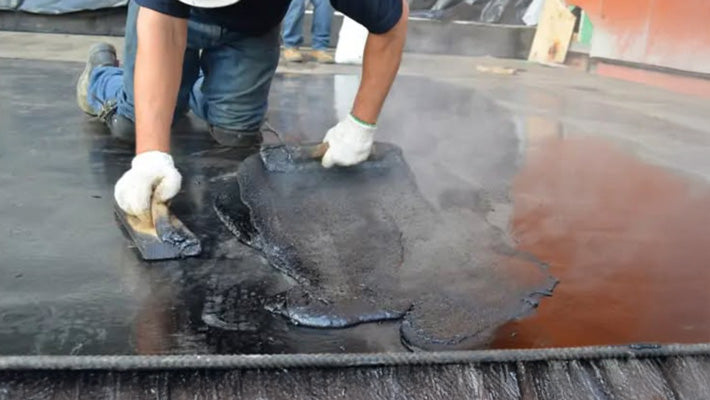
  • Below-Grade Structures — Foundations, sumps, underground piping, and buried concrete and steel

Key specs (per Carboline TDS, October 2025):

  • Solids by volume: 74% ± 2%
  • DFT: 16–24 mils per coat standard (1–2 coats)
  • Coverage @ 16 mils: 74 ft²/gal theoretical · ~59 ft²/gal practical
  • Mix ratio: 4:1 by volume (Part A to Part B)
  • Pot life: 2 hours @ 75°F · 1 hour @ 90°F
  • Self-priming on properly prepared steel and concrete
  • Meets: Corps of Engineers C-200, AWWA C-210-92, SSPC-Paint 16, STI-P3, MPI #35

Available in 1.25-gallon and 5-gallon kits — each kit includes Part A and Part B. Use the Coverage Calculator on this page to size your order before you buy.

Download Product Data Sheet (PDS) ›

Questions about your project? Call (800) 567-5358 — Mon–Fri 8AM–5PM EST. We'll help you confirm the right product and quantity before you order.

Size: 1.25-Gallon
Coverage Calculator
Standard: 16–24 mils

Compatible Thinners — Bitumastic 300 M

Thinner Use Max Rate VOC Impact
Thinner No. 10 — Steel Thinning for spray application on steel substrates 10 oz/gal (8%) 2.2 lbs/gal (269 g/l)
Thinner No. 10 — Concrete (1st coat) First coat to concrete only — improves substrate penetration 25 oz/gal (20%) 2.7 lbs/gal (327 g/l)
Thinner No. 10 — VOC-restricted areas When local 250 g/l VOC limit applies 6 oz/gal (max) Stays within 250 g/l limit
Thinner No. 2 or Acetone Cleanup only — spray line flushing, tool and equipment cleanup

Thinner No. 10 is the only approved application thinner for Bitumastic 300 M. Use of unauthorized thinners may adversely affect film performance and void the product warranty. The 25 oz/gal rate applies only to the first coat on concrete to improve penetration — subsequent coats revert to the standard 10 oz/gal maximum. For areas with a 250 g/l VOC restriction, limit thinning to 6 oz/gal maximum. Thinner No. 2 and Acetone are for cleanup only. Source: Carboline Bitumastic 300 M PDS (December 2024, doc 0165).

Coating Systems by Substrate & Service

Steel — Immersion Service ☆ Primary System

The most critical and most common application for Bitumastic 300 M. Used on tank interiors, buried pipelines, marine structures, and submerged steel in aggressive chemical and water environments. Requires SSPC-SP10 (Near-White Blast) with a 2.0–3.0 mil angular surface profile. Apply 16–24 mils DFT per coat. Holiday detect with high-voltage spark testing above 20 mils DFT per NACE SP0188. Force cure recommended at 25–35 mils (150°F for 8 hours). Immersion temperature not to exceed 120°F (49°C). Not approved for potable water.

Single or Two-Coat Lining Bitumastic 300 M Self-priming · SSPC-SP10 prep · 16–24 mils DFT per coat · 2.0–3.0 mil profile
Steel — Non-Immersion / Atmospheric Service

Structural steel, piping exteriors, and industrial equipment in aggressive atmospheric environments. Chemical plants, marine yards, heavy industrial facilities, and secondary containment. SSPC-SP6 (Commercial Blast) is the minimum for non-immersion service with a 2.0–3.0 mil angular surface profile. Apply 16–24 mils DFT per coat. Holiday detect with wet sponge testing below 20 mils DFT. Topcoating is not recommended over cured Bitumastic 300 M.

Single or Two-Coat System Bitumastic 300 M Self-priming · SSPC-SP6 prep · 16–24 mils DFT per coat · 2.0–3.0 mil profile
Steel — Two-Coat System for Maximum Film Thickness

For aggressive service requiring maximum barrier protection, Bitumastic 300 M can be applied in two coats. Apply the first coat at 16–24 mils DFT, observe the minimum recoat time (6 hours at 75°F), and apply the second coat within the 24-hour maximum recoat window. Total DFT must not exceed 35 mils without force curing. Remove any surface haze or blush by water washing before recoating. Use wet-on-wet spray with solvent flash time between passes at high thicknesses.

First Coat Bitumastic 300 M 16–24 mils DFT · recoat min 6 hrs / max 24 hrs at 75°F
Second Coat Bitumastic 300 M 16–24 mils DFT · total max 35 mils · force cure if 25–35 mils total
Concrete & CMU — Chemical Resistant Lining

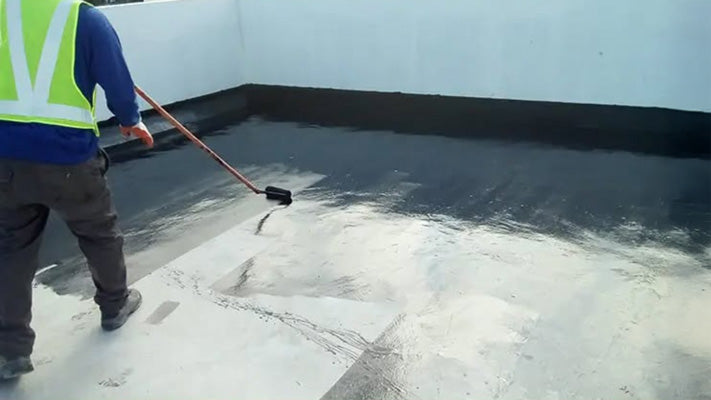
Concrete must be fully cured (28 days at 75°F and 50% RH or equivalent) before application. Clean per ASTM D4258 and abrade per ASTM D4259. Fill voids before coating. Thin the first coat up to 25 oz/gal (20%) with Thinner No. 10 to improve penetration into the substrate; subsequent coats at standard rate (max 10 oz/gal). Apply 16–24 mils DFT per coat. Suitable for chemical processing environments, secondary containment, and industrial floors.

First Coat — Penetrating Bitumastic 300 M Thin up to 25 oz/gal · ASTM D4258/4259 prep · 28-day cured concrete only
Second Coat Bitumastic 300 M Standard thinning (max 10 oz/gal) · 16–24 mils DFT
⚠️ Key limitations for all systems: Bitumastic 300 M is not approved for potable water in any application. Topcoating over cured Bitumastic 300 M is not recommended. Maximum recoat window is 24 hours at all temperatures — sweep blast required if exceeded. Immersion service temperature not to exceed 120°F (49°C). Source: Carboline Bitumastic 300 M PDS (December 2024, doc 0165).

Bitumastic 300 M High-Build Coal-Tar Epoxy Polyamide by Carboline

Product Specs — Bitumastic 300 M

Bitumastic 300 M — High-Build Coal-Tar Epoxy Polyamide by Carboline.
A renowned high-build coal-tar epoxy polyamide for protection of steel and concrete in aggressive industrial applications. Delivers exceptional chemical, corrosion, and abrasion resistance in single- or two-coat applications at 16 mils (406 microns) DFT per coat — up to 16–24 mils achievable in a single coat, with a maximum of 35 mils total with force cure. Self-priming. Compatible with controlled cathodic protection systems. Available in black only. Not approved for potable water. Topcoating is not recommended.

✓ Corp of Engineers C-200 & C-200a  •  ✓ AWWA C-210 (Exterior)  •  ✓ SSPC-Paint 16  •  ✓ STI-P3  •  ✓ MPI #35  •  ✓ Cathodic Protection Compatible
⚠️ Not approved for potable water. Topcoating is not recommended. Immersion temperature should not exceed 120°F (49°C).

✏️ Need a project quote? Request Online

📞 Questions? Call (800) 567-5358 — Mon–Fri 8AM–5PM EST

Bitumastic 300 M by Carboline

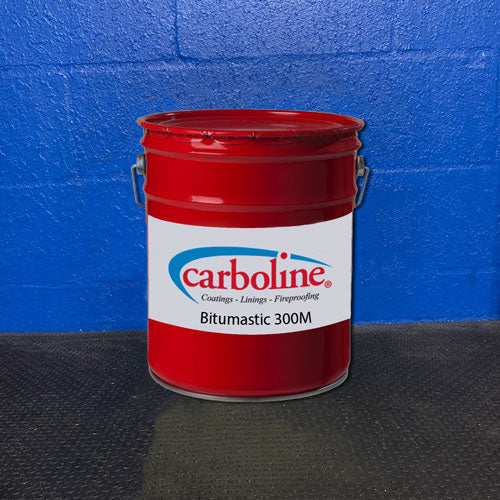
Bitumastic 300 M high-build coal-tar epoxy polyamide by Carboline — 1.25-gallon and 5-gallon kits
Bitumastic 300 M — 1.25-Gal & 5-Gal Kits (Parts A & B)

Shipping Map — Carboline Delivery Timing

US regional warehouse map showing estimated shipping transit times for Carboline product orders from Material Warehouse 🔍 Click to enlarge
Typical transit times vary by destination zone. Click map to enlarge.

Shipping Time

Call (800) 567-5358 for pricing and logistics questions.

Carboline orders ship from regional warehouses nearest to your location, with full product stock maintained at each facility.

Most orders ship within 2–3 business days of order placement. Transit times shown on the map are typical but not guaranteed.

Available sizes: 1.25-gallon kit (12 lbs)  •  5-gallon kit (50 lbs)

Coverage Rates & Technical Specifications

Recommended DFT: 16 mils (406 microns) per coat in one or two coats (up to 35 mils total with force cure). 74% volume solids. Coverage rates are significantly lower per gallon than thin-film topcoats — plan accordingly. Allow for loss in mixing and application.

PropertyValueNotes
Generic TypeCoal-Tar Epoxy PolyamideNot a polyurethane or siloxane — different chemistry entirely
Color / FinishBlack (P900) only — FlatNo other colors available
Volume Solids74% ±2%
Recommended DFT16 mils (406 µm) per coat — one or two coatsUp to 35 mils total with force cure. Do not exceed 35 mils total.
Coverage @ 1 mil1,187 ft²/gal (29.1 m²/l)Theoretical reference only
Coverage @ 16 mils74 ft²/gal (1.8 m²/l)Theoretical — standard single-coat DFT
Mix Ratio4:1 (Part A to Part B)Do not mix partial kits
Mixing ProcedurePower mix each part separately, then combine and power mix for min. 2 minutes
Pot Life @ 75°F2 hoursPot life ends when coating loses body and sags
Pot Life @ 90°F1 hourPlan batch sizes in hot weather
VOC (As Supplied)1.85 lbs/gal (222 g/l)Max 6 oz/gal thinning for 250 g/l restricted areas
Thinning (Steel)Up to 10 oz/gal (8%) with Thinner 10
Thinning (Concrete, 1st coat)Up to 25 oz/gal (20%) with Thinner 10First coat to concrete only
Min Surface Temp50°F (10°C) material, surface, and ambient
Max Surface TempMaterial 90°F · Surface 125°F · Ambient 110°F
Max Humidity90% RHSubstrate must be above the dew point
Dry Temp. Resistance350°F (177°C) continuous · 370°F (188°C) non-continuous
Wet (Immersion) Temp. Limit120°F (49°C) maximum
PrimerSelf-primingSuitable primer may be used as recommended by Carboline
TopcoatsNot recommended
Potable WaterNot approvedDo not use for potable water requirements
Cathodic ProtectionCompatible
CleanupThinner 2 or Acetone
Shelf Life — Part AMin. 24 months at 75°F (24°C)Unopened, stored indoors
Shelf Life — Part BMin. 36 months at 75°F (24°C)Unopened, stored indoors
StorageIndoors · 40–110°F · 0–100% RH
Flash Point — Part A75°F (24°C)Flammable at ambient temperature — handle with care
Flash Point — Part B>200°F (93°C)
Kit Sizes1.25-gal (12 lbs) · 5-gal (50 lbs)

Source: Carboline Bitumastic 300 M Product Data Sheet (December 2024, doc 0165). Coverage rates are theoretical — actual yield varies with surface profile, temperature, and application method.

Application Conditions

Condition Material Surface Ambient Humidity
Minimum50°F (10°C)50°F (10°C)50°F (10°C)0%
Maximum90°F (32°C)125°F (52°C)110°F (43°C)90%
⚠️ Substrate temperature must be above the dew point. Condensation below the dew point causes flash rusting on prepared steel and interferes with adhesion. Excessive humidity or condensation during curing can cause discoloration and surface haze — any haze or blush must be removed by water washing before recoating.

Curing Schedule

Based on 16.0 mil (400 micron) DFT. Higher film thickness, insufficient ventilation, high humidity, or cooler temperatures extend cure times. Both minimum and maximum recoat times apply.

Surface Temp. Dry to Touch Min Recoat Max Recoat Final Cure (Immersion)
50°F (10°C)8 Hours10 Hours24 Hours14 Days
75°F (24°C)4 Hours6 Hours24 Hours7 Days
90°F (32°C)2 Hours3 Hours24 Hours5 Days

Maximum recoat exceeded: If the 24-hour maximum is exceeded, abrade the surface by sweep blasting before applying additional coats.

Force cure (25–35 mils DFT): Hold substrate at 150°F for 8 hours. Material will be ready to handle and ready for immersion service after force cure.

Holiday detection: Use wet sponge testing below 20 mils DFT. Use high-voltage spark testing above 20 mils DFT. Refer to NACE SP0188 for procedures.

Surface Preparation

All surfaces must be clean and dry. Remove all dirt, dust, oil, and contaminants per SSPC-SP1 before blasting.

Substrate / Service Preparation Requirement
Steel — ImmersionSSPC-SP10 (Near-White Blast) · Profile: 2.0–3.0 mils (50–75 µm)
Steel — Non-ImmersionSSPC-SP6 (Commercial Blast) · Profile: 2.0–3.0 mils (50–75 µm)
Steel — Absolute MinimumSSPC-SP2 or SSPC-SP3 (Hand/Power Tool Clean)
Concrete / CMUConcrete must be cured 28 days at 75°F and 50% RH or equivalent. Prepare per ASTM D4258 (cleaning) and ASTM D4259 (abrading). Voids may require surfacing. Thin first coat up to 25 oz/gal with Thinner 10.

Source: Carboline Bitumastic 300 M PDS (December 2024, doc 0165).

Performance Test Data

All test data generated under laboratory conditions. Field results may vary.

Test Method System Result
ASTM B117 Salt FogBlasted Steel · 2 cts. 300MNo blistering, rusting, or delamination. No measurable undercutting at scribe after 2,000 hours
ASTM D2794 ImpactBlasted Steel · 2 cts. 300MImpact site diameter: 3/8", 3/8", 1/2" — 100 in/lbs Gardner Impactor at 1/2" diam.
ASTM D4060 AbrasionBlasted Steel · 2 cts. 300M130 mg loss after 1,000 cycles — CS17 wheel, 1,000 gm load
ASTM D4541 AdhesionBlasted Steel · 2 cts. 300M1,443 psi (Pneumatic)

Test reports and additional data available upon written request from Carboline. Source: Carboline Bitumastic 300 M PDS (December 2024, doc 0165).

Good to Know Before You Buy

⚠️ Critical Notes — Coal-Tar Epoxy Is Different
  1. Not approved for potable water — no exceptions. Bitumastic 300 M is explicitly excluded from potable water service. Do not use in drinking water tanks, reservoirs, or any potable water infrastructure. A different Carboline product is required for those applications.
  2. There is both a minimum AND a maximum recoat time. The 24-hour maximum recoat window applies at all temperatures. Miss it, and you must sweep blast the surface before recoating. Plan your schedule around both limits — not just the minimum.
  3. Pot life is short: 2 hours at 75°F, 1 hour at 90°F. Mix only what you can apply within the pot life window. Pot life ends when the coating loses body and begins to sag — do not apply sagging material. Mix smaller batches in hot weather.
  4. Part A has a flash point of 75°F — it is flammable at room temperature. Keep away from sparks, open flames, and ignition sources at all times during storage, handling, and application. Use non-ferrous tools and conductive footwear in explosion-hazard areas per the National Electric Code.

Frequently Asked Questions — Bitumastic 300 M

What is the coverage rate for Bitumastic 300 M?
Bitumastic 300 M covers 74 ft²/gal at 16.0 mils DFT (1.8 m²/l at 400 microns) theoretical, based on 74% volume solids. The recommended DFT is 16 mils per coat in one or two coats. With force curing, up to 35 mils total is achievable. Coverage is significantly lower per gallon than thin-film topcoats — plan material quantities accordingly.
What is the mix ratio and pot life?
Bitumastic 300 M uses a 4:1 mix ratio (Part A to Part B). Power mix each part separately, then combine and power mix for a minimum of two minutes. Do not mix partial kits. Pot life is 2 hours at 75°F and 1 hour at 90°F. Pot life ends when the coating loses body and begins to sag — sagging material should not be used.
What is the maximum recoat time — and what happens if I miss it?
The maximum recoat time is 24 hours at all application temperatures (50°F, 75°F, and 90°F). Minimum recoat times are: 10 hours at 50°F, 6 hours at 75°F, and 3 hours at 90°F. If the 24-hour maximum is exceeded, the surface must be abraded by sweep blasting before any additional coats are applied. Any surface haze or blush from humidity during cure must be water-washed before recoating.
Can Bitumastic 300 M be used for potable water?
No. Bitumastic 300 M is explicitly not approved for potable water requirements. It is a coal-tar epoxy and is not suitable for contact with drinking water. Contact Carboline Technical Service for appropriate potable water system recommendations.
What specifications does Bitumastic 300 M meet?
Bitumastic 300 M meets Corp of Engineers C-200 and C-200a, AWWA C-210 for exterior, SSPC-Paint 16, Steel Tank Institute Corrosion Control System STI-P3, and is Approved MPI #35. It is also compatible with controlled cathodic protection systems.
What surface preparation is required?
For steel in immersion service: SSPC-SP10 (Near-White Blast) with a 2.0–3.0 mil surface profile. For non-immersion steel: SSPC-SP6 (Commercial Blast) with the same profile. SSPC-SP2 or SP3 are the absolute minimum. For concrete or CMU, the surface must be cured 28 days at 75°F and 50% RH, then prepared per ASTM D4258 (cleaning) and ASTM D4259 (abrading).
Is holiday detection required?
Holiday detection requirements depend on dry film thickness. Wet sponge testing may be used when DFT is below 20 mils (500 microns). High-voltage spark testing must be used when DFT exceeds 20 mils (500 microns). Refer to the latest version of NACE SP0188 for specific procedures and voltage settings.
When is force curing required?
Force curing is recommended for film thicknesses of 25–35 mils DFT. Hold the substrate temperature at 150°F for 8 hours — the material will be ready to handle and ready for immersion service after this period. At lower DFTs (16 mils), standard ambient cure applies.

Compare products

{"one"=>"Select 2 or 3 items to compare", "other"=>"{{ count }} of 3 items selected"}

Select first item to compare

Select second item to compare

Select third item to compare

Compare