Skip to content
FREE SHIPPING ON ALL ORDERS $500 OR MORE

Carbothane 133 LH - Satin Topcoat - Low Cure Temp

Original price $313.93 - Original price $1,770.55
Original price
$313.93
$313.93 - $1,770.55
Current price $313.93

Carbothane 133 LH Polyurethane Aliphatic Topcoat is a premium aliphatic acrylic polyurethane finish coat engineered by Carboline for superior long-term protection in industrial and harsh environments. 
Low Sheen Satin Finish with High Build. 

It is ideal as a topcoat over various Carboline primers and intermediate coats, enabling efficient two-coat systems and offering indefinite recoatability for flexible application schedules.

Carbothane 133 LH PDS >
Finish: Low Sheen
Theoretical Coverage: 978 ft²/gal at 1.0 mils (24.0 m²/l at 25 microns) – refer to PDS for color-specific and practical rates (high-build typically applied at 3-6 mils DFT).
Thinner: Use Carboline Thinner 225E, 236E, 243E 

VIEW THE ENTIRE LINE OF CARBOLINE COATINGS HERE>

Key Features:

  • Outstanding Corrosion & Chemical Resistance: Provides excellent barrier protection against mild to aggressive environments, including industrial chemicals, moisture, and salt exposure.
  • High Build Formulation: Allows thicker films in fewer coats; suitable for many two-coat systems over primers or inorganic zincs.
  • Superior Weathering & UV Resistance: Aliphatic polyurethane chemistry ensures long-term color and gloss retention with minimal chalking in exterior exposure.
  • Abrasion & Impact Resistant: Tough, durable film withstands mechanical wear in demanding service conditions.
  • Versatile Application & Indefinite Recoatability: Apply by spray, brush, or roller; no maximum recoat time for maximum scheduling flexibility.
  • Exceeds SSPC Paint 36 Level 3: Meets high-performance urethane standards for corrosion protection; VOC compliant to current AIM regulations; low HAPs content.

Common Industry Applications:

  • Oil & Gas / Petrochemical: Tanks, piping, structural steel, and equipment in onshore/offshore facilities exposed to corrosives and weathering.
  • Power Generation & Utilities: Bridges, transmission towers, boilers, and steel structures requiring durable, low-maintenance finishes.
  • Water & Wastewater: Treatment plants, tanks, and infrastructure with chemical and moisture exposure.
  • Industrial & Manufacturing: Machinery, railcars, conveyors, and facilities in aggressive atmospheric or splash/spill zones.
  • Bridge & Highway / Infrastructure: Steel bridges, port facilities, and structures in coastal or high-humidity environments.

Carbothane 133 LH is a TWO-COMPONENT SYSTEM (PARTS A & B).

Product type: Aliphatic Acrylic Polyurethane Topcoat. Carbothane 133 LH has a low sheen finish. Applied via Airless Spray, Conventional Spray, Brush, or Roller 

Shipping & Delivery: Carboline orders typically ship within 1-2 business days of receipt. Most orders are received within a week. Expedited shipping is NOT available on most orders.

Looking for a Carboline product? 
Contact our customer support today to discuss your project:
(800) 567-5358

Size: 1Gal
Color: White (1864)
Coverage Calculator

Compatible Thinners

Thinner Conditions Notes
Thinner 225E (exempt) Normal conditions VOC-exempt; does not change VOC value when thinned 5%
Thinner 236E (exempt) Normal conditions VOC-exempt; does not change VOC value when thinned 5%
Thinner 243E (exempt) Normal conditions VOC-exempt; does not change VOC value when thinned 5%
Thinner 25 When exempt thinners unavailable ⚠️ Increases VOC and HAPs content — consult Carboline Technical Service
Thinner 2 / Acetone Cleanup only Not for thinning; use for equipment and brush cleanup

⚠️ Thinning is not normally required. Use of unauthorized thinners may void the manufacturer's warranty. Consult the Carbothane 133 LH PDS for guidance.

Typical Coating Systems

Standard 3-Coat — Structural Steel / Infrastructure
Primer Carbozinc Series IOZ or organic zinc per spec
Intermediate Carboguard Series Epoxy intermediate
Topcoat (This Product) Carbothane 133 LH 3–5 mils DFT · satin finish
2-Coat System — High-Build Direct to Primer
Primer Carbomastic or Carboguard Per Carboline recommendation
Topcoat (This Product) Carbothane 133 LH 3–5 mils DFT · high build
💡 133 LH's high-build formulation makes it suitable for many two-coat systems, reducing total coat count and application time vs. standard-build topcoats.
Over Inorganic Zinc — Full System
Primer Carbozinc 11 HS 2–3 mils DFT · IOZ
Intermediate Carboguard 890 Epoxy intermediate / mist coat first
Topcoat (This Product) Carbothane 133 LH 3–5 mils DFT · satin finish
⚠️ When applying over inorganic zinc, a mist coat of the epoxy intermediate may be required to prevent outgassing bubbles. Consult Carboline Technical Service for the specific system.
With Clear Coat — When Required
Primer / Intermediate Per System Spec
Base Coat (This Product) Carbothane 133 LH 3–5 mils DFT
Clear Coat (If Specified) Carbothane Clear Coat When required by spec

Carbothane 133 LH High Build Polyurethane Topcoat by Carboline

Product Specs — Carbothane 133 LH

Carbothane 133 LH — High-Build Aliphatic Acrylic-Polyester Polyurethane Topcoat by Carboline.
Satin to low-sheen semi-gloss finish with excellent resistance to corrosion, chemicals, and abrasion. The polyester backbone imparts enhanced chemical resistance beyond standard acrylic urethanes — suitable for a broader range of asset types and exposures. Exceeds SSPC Paint 36 Level 3. High-build 3–5 mils DFT. Indefinite recoat window. Low HAPs content. Environmental Product Declaration (EPD) available.

✔ VOC: 324 g/L (2.7 lbs/gal) as supplied  •  ✔ Mix ratio 4:1 (A to B / UC 8800)  •  ✔ Pot life: 4 hrs @ 75°F  •  ✔ Indefinite recoat  •  ✔ Exceeds SSPC Paint 36 Level 3  •  ✔ Low HAPs

✏️ Need a project quote? Request Online

📞 Questions? Call (800) 567-5358 — Mon–Fri 8AM–5PM EST

Carbothane 133 LH by Carboline

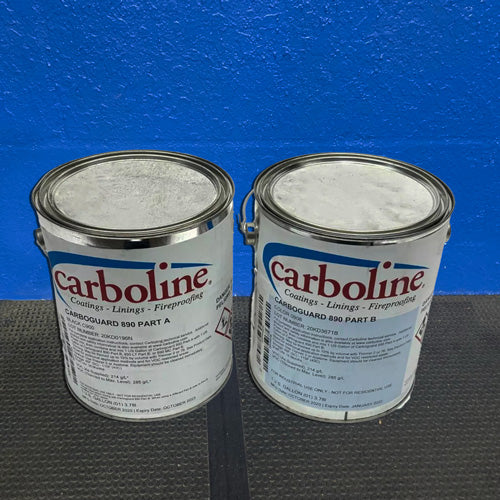
Carbothane 133 LH aliphatic polyurethane high-build satin topcoat by Carboline — 5-gallon pail
Carbothane 133 LH — High-Build Aliphatic Polyurethane Satin Topcoat

Shipping Map — Carboline Delivery Timing

US regional warehouse map showing estimated shipping transit times for Carboline product orders from Material Warehouse
Typical transit times vary by destination zone. Most orders ship within 1–2 business days.

Shipping Time

Call (800) 567-5358 for pricing and logistics questions.

Carboline orders ship from regional warehouses nearest to your location, with full product stock maintained at each facility.

Most orders ship within 1–2 business days of order placement. The next day is considered day "one." Transit times shown on the map are typical but not guaranteed.

Coverage Rates & Technical Specifications

Recommended DFT: 3–5 mils per coat. 61% volume solids. Do not exceed 7 mils per coat. Allow for loss in mixing and application.

Property Value Notes
Product TypeAliphatic Acrylic-Polyester PolyurethaneTopcoat / finish coat
Components2-Part Kit (A + B)Part A (base) + Part B (UC 8800 isocyanate)
Mix Ratio4:1 by volume (A to B)Do not mix partial kits
FinishSatin to Low Sheen Semi-GlossLow reflectivity; suitable for industrial & infrastructure
Recommended DFT3–5 mils (76–127 µm) per coatDo not exceed 7 mils per coat
Coverage @ 1 mil978 ft²/gal (24.0 m²/l)Theoretical — allow for application loss
Coverage @ 3 mils326 ft²/gal (8.0 m²/l)Theoretical — recommended DFT minimum
Coverage @ 5 mils196 ft²/gal (4.8 m²/l)Theoretical — recommended DFT maximum
Volume Solids61% ±2%Per PDS
Pot Life @ 75°F4 hoursLess at higher temperatures; moisture shortens pot life and causes gelation
Dry to Handle @ 75°F6 hoursBased on 3.0–5.0 mil DFT
Dry to Recoat @ 75°F6 hours minimumMaximum recoat time: indefinite
Final Cure @ 75°F7 daysSee full curing schedule for other temperatures
Min Application Temp40°F (4°C)With Additive 101: down to 20°F (-7°C)
Max Humidity90% RHMoisture sensitive in liquid stage — protect from dew & rain
Service Temp (Continuous)300°F (149°C)Some discoloration/gloss loss may occur at elevated temperatures
Application MethodsAirless Spray, Conventional Spray, Brush, RollerBrush for touch-up only; roller requires medium-nap synthetic with phenolic core
Approved Thinners225E, 236E, 243E (VOC-exempt)Thinning not normally required; Thinner 25 increases VOC and HAPs
CleanupThinner 2 or Acetone
VOC (As Supplied)2.7 lbs/gal (324 g/l)Compliant to current AIM regulations; all exempt thinners maintain this value at 5%
HAPs ContentLowPer PDS feature list
SSPC ComplianceExceeds SSPC Paint 36 Level 3Long-term color and gloss retention demonstrated
Flash Point (Part A)68°F (20°C)Setaflash method
Flash Point (Part B)28°F (-2°C)Setaflash method
Colors AvailableWhite (1864), Safety Yellow (6666), Safety Red (5555), Grey (C703), Light Grey (C705), Black (C900); custom on requestContact Carboline representative for custom color availability
Kit Sizes1-gal kit (15 lbs) · 5-gal kit (70 lbs)Approximate shipping weights
Shelf Life (A & B)Min. 24 months at 75°FUnopened, in original containers, stored indoors
StorageIndoors · 40–110°F (OK down to 10°F for ≤14 days)Solvent-based; not damaged by brief cold excursions

Source: Carboline Carbothane 133 LH Product Data Sheet (January 2026, doc 8837). Coverage rates are theoretical — actual yield varies with surface profile, temperature, and application technique.

Curing Schedule

Times based on 3.0–5.0 mil DFT. Higher film thickness, insufficient ventilation, or cooler temperatures require longer cure times and could result in solvent entrapment and premature failure. Maximum recoat time is indefinite — surface must be clean and dry.

Surface Temp. Dry to Handle Dry to Recoat Final Cure
40°F (4°C)24 Hours24 Hours28 Days
50°F (10°C)15 Hours15 Hours14 Days
75°F (24°C)6 Hours6 Hours7 Days
90°F (32°C)3 Hours3 Hours4 Days
💡 Additive 101 — Cold Weather & Accelerated Cure: Add at 1.0–2.0 oz per mixed gallon (max 6 oz per mixed 5 gal) to accelerate cure 25–40% and enable application down to 20°F (-7°C). Reduces pot life by approximately 40–50%. Consult Carboline Technical Service before use.

Source: Carboline Carbothane 133 LH PDS (January 2026, doc 8837).

Carbothane 133 LH vs. 134 HG — Detailed Spec Comparison

Both are aliphatic polyurethane topcoats by Carboline, but they serve different priorities. Use this table to match the right product to your project requirements.

Property 133 LH This Product 134 HG
Generic Type Aliphatic Acrylic-Polyester Polyurethane Aliphatic Acrylic Polyurethane
Finish Satin / Low Sheen Semi-Gloss High Gloss
Chemical Resistance Enhanced — polyester backbone provides greater resistance vs. standard urethanes Excellent — standard aliphatic urethane chemistry
SSPC Paint 36 Exceeds Level 3 Exceeds Level 3
VOC as Supplied 2.7 lbs/gal (324 g/l) ~2.2 lbs/gal (264 g/l)
Volume Solids 61% ±2% ~65% ±2%
Mix Ratio (A:B) 4:1 4:1
Recommended DFT 3–5 mils per coat 2–4 mils per coat
Coverage @ 3 mils 326 ft²/gal ~354 ft²/gal
Min Application Temp 40°F (20°F with Additive 101) 50°F material · 35°F surface
Max Humidity 90% RH 80% RH (more restrictive)
Pot Life @ 75°F 4 hours 4 hours
Dry to Recoat @ 75°F 6 hours 8 hours
Max Recoat Window Indefinite Indefinite
Metallic Colors No Yes
AWWA / MIL Specs AWWA D102 OCS 5&6 · MIL-PRF-85285E · UFGS 09 97 13.27
EPD Available Yes No
Best For Projects requiring low sheen, enhanced chemical resistance, cold-weather application, or scheduling flexibility Projects where maximum gloss, metallic colors, or AWWA/MIL compliance are the priority

Comparison based on published Carboline PDS data: 133 LH (January 2026, doc 8837), 134 HG (Oct 2024, doc 0859). Verify specifications with Carboline Technical Service for your specific project requirements.

When to Choose Each — Carbothane 133/134 Family

133 LV

Lowest VOC, longest pot life, satin/semi-gloss

Choose for: VOC-restricted jurisdictions or projects where the lowest possible solvent emissions matter. Also the best pick when applicators need extra working time (6-hour pot life vs. 4-hour for the others).

133 LH

Low-sheen satin, SSPC Paint 36 Level 3, enhanced chemical resistance

Choose for: Industrial maintenance and bridge/highway specifications calling for SSPC Paint 36 Level 3. The polyester backbone delivers enhanced chemical resistance for tanks, piping, and chemical environments. Coldest minimum application temperature in the family (40°F; 20°F with Additive 101).

133 HB

High build, direct-to-inorganic-zinc, proven ASTM test data

Choose for: Industrial steel projects where a thicker single coat, direct application over inorganic zinc primers (via mist coat), and an extensive ASTM track record matter — including 4,000-hour salt fog, 8,600-hour water fog, and 78% gloss retention through 1,008-hour QUV/Prohesion cycles.

134 HG

Gloss finish, metallic colors, AWWA/MIL specs

Choose for: Architectural or specification work requiring high gloss, metallic-pigmented colors, or compliance with AWWA D102 OCS 5/6, MIL-PRF-85285E, UFGS 09 97 13.27, or USDA inspected facilities. Thin-film 2–4 mil application.

Comparison sourced from Carboline TDS documents: 133 LV (May 2025, doc 0195), 133 LH (Jan 2026, doc 8837), 133 HB (June 2021, doc 0840), 134 HG (Oct 2024, doc 0859).

⚠️ Good to Know Before You Buy

  1. 4:1 mix ratio — do not mix partial kits. Power mix Part A separately before combining with Part B. Pot life is 4 hours at 75°F and shorter at higher temperatures. Moisture contamination will shorten pot life and cause gelation — keep containers sealed when not actively mixing or applying.
  2. The polyester backbone is a differentiator. Unlike standard acrylic urethanes, the polyester chemistry in 133 LH provides greater chemical resistance — making it the right choice for tanks, chemical storage areas, and environments with splash or fume exposure.
  3. Exceeds SSPC Paint 36 Level 3 — specifiable by name. If your specification calls for a Level 3 urethane per SSPC Paint 36, 133 LH satisfies it. Confirm with your specifier that the product name and doc 8837 are cited correctly.
  4. Moisture-sensitive in the liquid stage. Protect from humidity above 90% RH, dew, and direct moisture contact until fully cured. Application in high humidity or exposure to rain/dew before cure can cause loss of gloss and micro-bubbling.
  5. Indefinite recoat window. Before applying additional coats, wipe the surface with Thinner 25 — if the film shows a slight tack, recoat directly without abrading. If fully cured with no tack, lightly sand or abrade before recoating.
  6. Cold-weather application with Additive 101. Without Additive 101, minimum temperature is 40°F. With Additive 101 (1.0–2.0 oz/mixed gal; max 6 oz per 5 gal), cure extends to 20°F but pot life drops approximately 40–50%. Plan batch sizes accordingly and consult Carboline Technical Service.
  7. Thinning not normally required — use only approved exempt thinners. Thinners 225E, 236E, and 243E are VOC-exempt and maintain the 2.7 lbs/gal VOC value. Thinner 25 increases VOC and HAPs content. Use of non-Carboline thinners may void the warranty. Cleanup: Thinner 2 or Acetone.
  8. Roller application requires multiple coats. When applying by brush or roller, multiple coats may be required to achieve the recommended DFT. Avoid excessive rebrushing or re-rolling, and tie in within 10 minutes at 75°F for best results.
  9. Flash points are low — Part A: 68°F, Part B: 28°F. Follow all SDS requirements for ventilation, ignition source control, and personal protective equipment. When used in enclosed areas, thorough air circulation must be maintained during and after application until the coating is cured.
  10. Not a tank lining product. 133 LH is rated for atmospheric and corrosive atmospheric exposure. For immersion service, consult Carboline Technical Service for the appropriate lining system selection.

Frequently Asked Questions — Carbothane 133 LH

What is the coverage rate for Carbothane 133 LH?
Carbothane 133 LH covers 326 ft²/gal at 3 mils DFT and 196 ft²/gal at 5 mils DFT (theoretical, based on 61% volume solids). The recommended DFT is 3–5 mils per coat. Allow for practical application loss. Do not exceed 7 mils per coat.
What is the mix ratio and how do I mix Carbothane 133 LH?
Mix ratio is 4:1 by volume (Part A to Part B / UC 8800). Power mix Part A separately first, then add Part B and power mix together. Do not mix partial kits. Pot life is 4 hours at 75°F — moisture contamination will shorten pot life and cause gelation. Keep containers sealed when not actively mixing or applying.
Does Carbothane 133 LH meet SSPC Paint 36?
Yes — it exceeds SSPC Paint 36 Level 3. This makes 133 LH a directly specifiable product for bridge and highway, industrial maintenance, and infrastructure projects where a Level 3 urethane is required. Confirm with your specifier that Carbothane 133 LH (doc 8837) is cited correctly in the project specification.
Can Carbothane 133 LH be applied in cold weather?
Standard minimum application temperature is 40°F (4°C) for material, surface, and ambient. With Carboline Additive 101 (1.0–2.0 oz per mixed gallon; max 6 oz per mixed 5 gallons), the product will continue to cure down to 20°F (-7°C). Additive 101 accelerates cure by 25–40% but reduces pot life by approximately 40–50% — plan batch sizes accordingly and consult Carboline Technical Service before use.
What thinners are approved for Carbothane 133 LH?
Thinning is not normally required. When needed, use Thinner 225E, 236E, or 243E — all are VOC-exempt and maintain the as-supplied VOC value of 2.7 lbs/gal (324 g/l) when thinned at 5%. Thinner 25 may be used but increases VOC and HAPs content — consult Carboline Technical Service for guidance. Use of non-Carboline thinners may void the product warranty. Cleanup: Thinner 2 or Acetone.
What does indefinite recoatability mean in practice?
There is no maximum window after which you must mechanically prepare the surface before recoating. Once the surface is dry and clean, additional coats can be applied at any time. As a practical check, wipe the surface with Thinner 25 — if the film shows slight tack, recoat directly without abrading. If no tack is present, lightly sand or abrade before the next coat. This eliminates the scheduling pressure common with other topcoats that have maximum recoat windows.
Why choose 133 LH over 134 HG?
Choose 133 LH when you need a satin/low-sheen finish, enhanced chemical resistance (the polyester backbone outperforms standard acrylic urethanes in chemical environments), a lower minimum application temperature (40°F vs. 50°F material for 134 HG), or a non-reflective surface for industrial aesthetics. Choose 134 HG when maximum gloss, metallic-pigmented colors, or compliance with AWWA D102, MIL-PRF-85285E, or UFGS 09 97 13.27 are the primary requirements.
What is Carboline Additive 101 and when should I use it with 133 LH?
Carboline Additive 101 accelerates the film-forming process for conditions outside the normal parameters of the PDS. Added at 1.0–2.0 oz per mixed gallon (max 6 oz per mixed 5 gallons), it accelerates cure 25–40% depending on substrate temperature and enables curing down to 20°F (-7°C). It also reduces pot life by approximately 40–50% — plan batch sizes accordingly. It is especially useful for cold-weather application or accelerated-schedule projects where quick return to service is critical.
Is Carbothane 133 LH suitable for immersion or tank lining?
Carbothane 133 LH is a topcoat/finish coat rated for atmospheric and corrosive atmospheric exposure. It is not a tank lining product and is not intended for continuous immersion service. For immersion or severe chemical lining applications, consult Carboline Technical Service for the appropriate system selection. 133 LH is well suited for the exterior of tanks, structural steel, piping, bridges, and equipment in atmospheric corrosive environments.

Compare products

{"one"=>"Select 2 or 3 items to compare", "other"=>"{{ count }} of 3 items selected"}

Select first item to compare

Select second item to compare

Select third item to compare

Compare